Mike Humble:
“Austin Rover really went to town in terms of interior build quality, it looked gorgeous, smelled gorgeous and had a feeling of quality not seen in a small British car since… erm… ever“

Once upon a time, the badge said it all. Back in the eighties, Ford had added their ‘XR’ moniker to the unstoppable marketing department of Uncle Henry that already had ‘Ghia’, and in the same decade Audi of course had ‘Quattro’ too, winning the Bavarian battle of household name supremacy despite the threat of being usurped by a rather rubbish fizzy drink in a can. By the way, that had to be spelt with just one letter ‘t’ owing to a threat of German legal action over copyright. Having the right badge meant everything. I recall getting my first Cortina Ghia and telling a mate in a pub I’d bought a Cortina 1.6, ‘L or GL’ I was asked, shaking my head he asked me if it was a Crusader; ‘no Alan’ I retorted; ‘it’s a Ghia’. Alan raised one eyebrow akin to Mr Spock – a silent but sure sign the wood trimmed door cappings and rev counter had moved me one rung up the class ladder in his eyes.
The name Vanden Plas or VDP to the uneducated Philistine conjures up perhaps an image of a tarted up Maestro or Montego (though the 2.0Efi estate VDP Montego were a lovely looking bus if not ravaged by rust) but they had some pedigree. Vanden Plas was once a bespoke coachbuilding company with its roots going way back to the very start of the `1900s. It was a Belgian company to start with becoming a British concern after financial troubles shortly after the first World war. It soon became synonymous with bespoke craftsmanship and quality working with great names like Bentley, Lagonda and even Rolls Royce. The rest as they say, is history and in a roundabout way VDP became part of Austin in 1945 and the name became a stand alone brand rather than someone else’s vehicle with VDP coachwork.
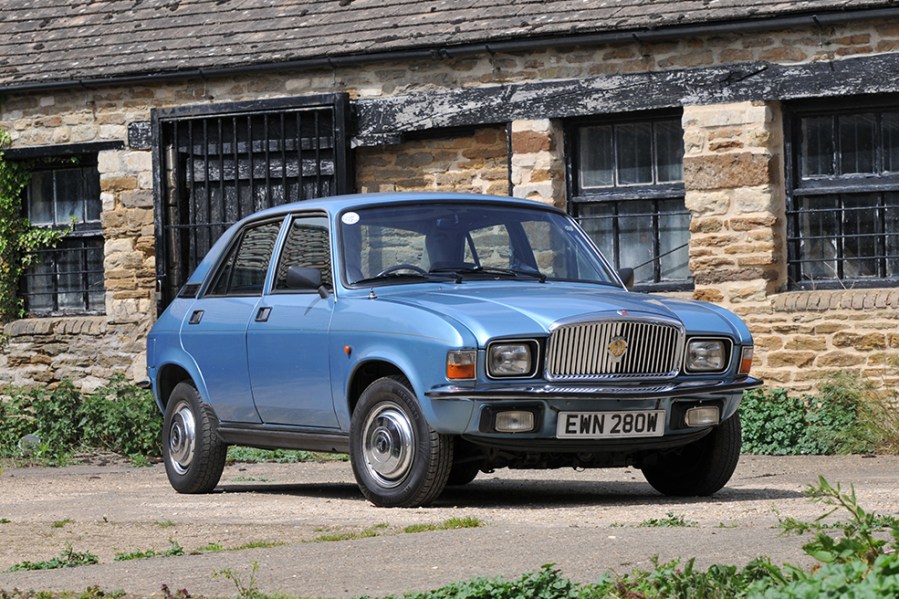
Jaguar Daimler saloon cars and limousines became well known for using the VDP name adding extra kudos as British Leyland’s policy of rampant badge engineering became the norm. Even the bloody Allegro got the VDP treatment – called the Vanden Plas 1500 with its bulbous grille and leather clad interior – an old engineering tutor of mine used to wince at the site of one that used to reside in the college staff car park. I recall him once saying to one day; ‘look at that Mike… it’s like a pig wearing lipstick’ – its critics were somewhat less kind however. The Kingsbury plant closed in 1979 with production moving to MG at Abingdon – for barely one year as the B.L recovery plan saw the death of Abingdon along with the MG and VDP brand – though the latter continued on Jaguar XJ and Daimler cars until 1984.
With the advent of the Austin Metro in 1980, the range became expanded further by the resurrection of both MG and VDP badges in 1982. The Metro could now be had in a serious sporty 1300 MG or luxury 1.3 Vanden Plas rather than the non descript 1.3 S or HLS. But it wasn’t until later on in 1984 when the Metro got its first update and facelift that the VDP really started to shine. Now with five doors and a flowing facia that no longer looked like it had been developed on a budget with the money found down the back of Harrold Musgrove’s settee, the Metro Vanden Plas looked properly swish inside having plenty of ‘perceived’ quality the model had lacked since launched. There was lovely box section velour fabric with thick carpet that not only graced the floor but the bottom of the door cards too.
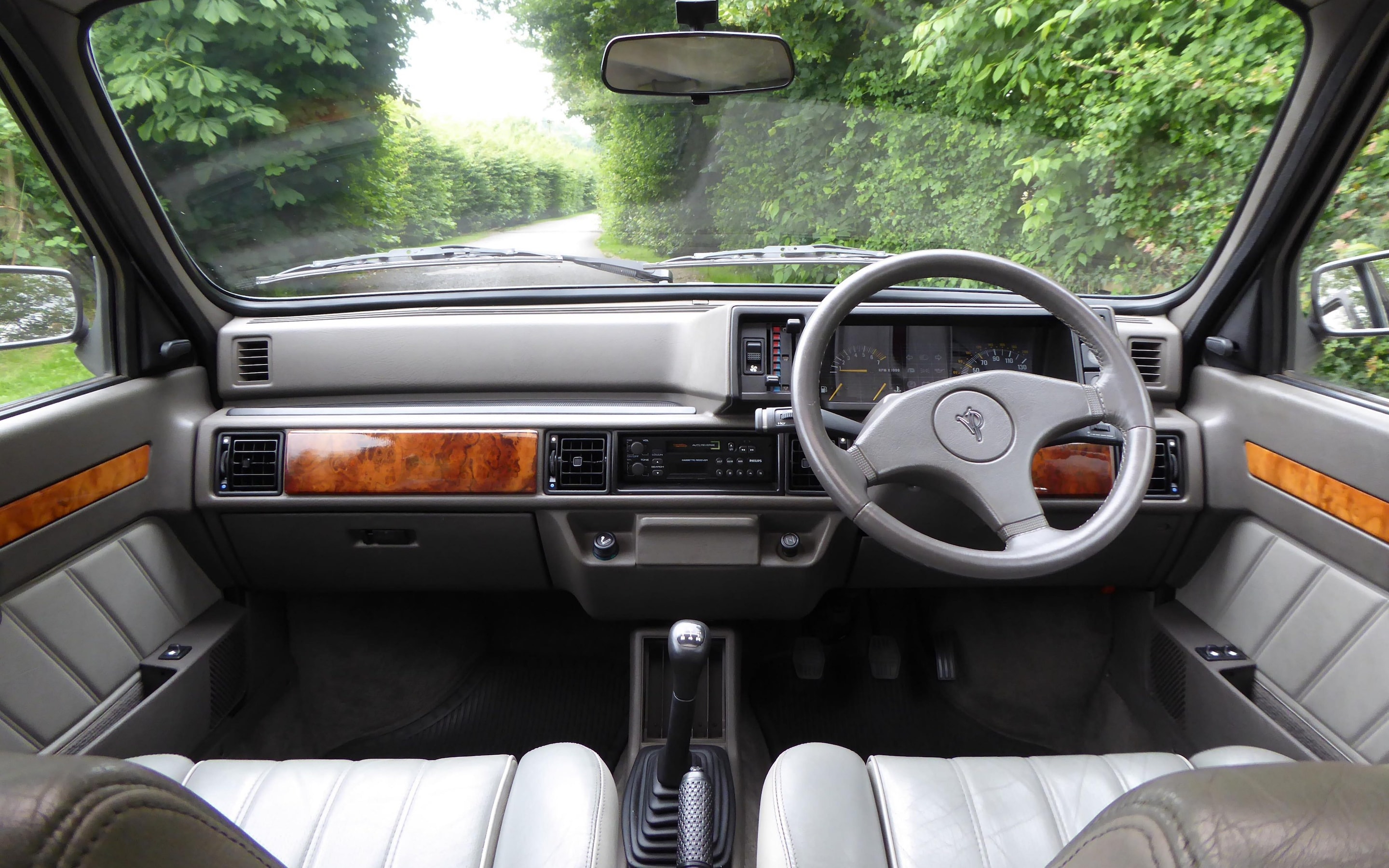
Lashings of extra sound insulation went some way to drowning out the whining A+ series gearbox and a similar final drive ratio to the economy tune HLE models made motorway driving that bit more refined. Austin Rover also upped the performance too, on manual versions, by slotting in the same engine as the MG version seeing a hike in power from 61 to 71 bhp. The MG version boasted one extra horsepower (72) owing to the centre silencer having a larger bore – eh? Stick that in your trivia pipe and smoke it. Better brakes too with a ridiculously over specified four piston brake calipers and ventilated front discs, despite having a driveline benchmarked on a Roman chariot in terms of modernity, these later uprated 1300 Metro’s were riotous fun to drive in anger.

Thanks to lovely duo-tone paint schemes and a cracking Connolly leather interior option, the inside of a Metro VDP with cheeky little touches like an overhead digital clock, decent wireless, footwell courtesy lights, a chunky three spoke leather clad tiller and acres of genuine burr walnut made the Fiesta Ghia look a base model in comparison. Austin Rover really went to town in terms of interior build quality, it looked gorgeous, smelled gorgeous and had a feeling of quality not seen in a small British car since… erm… ever. Take a long hard look at the images and tell me if you think this looks cheap and tacky.
As I have said before, despite having no real engineering budget to speak of, dem clever folks at Longbridge could create miracles to almost eclipse the feeding of the five thousand!
WHAT SAY YOU? Comment Below.
 Autobritannia
My Aunt had one of them in gold that was handed down to me when she wanted power steering.
Loved it as a first car, went like Billy O and was good on petrol well. Went to the breakers after hitting a hole where someone had pinched the manhole cover and ripped out the offside suspension.
Had a Metro GTa after that, the Rover type which was good fun too.
I agree Bob.
The single cam 8v 1.4 K series is a peach of an engine, possibly the best of the bunch.
I hired a manual metro vdp. Cracking car with its MG motor.
And only one BHP less than the MG as well